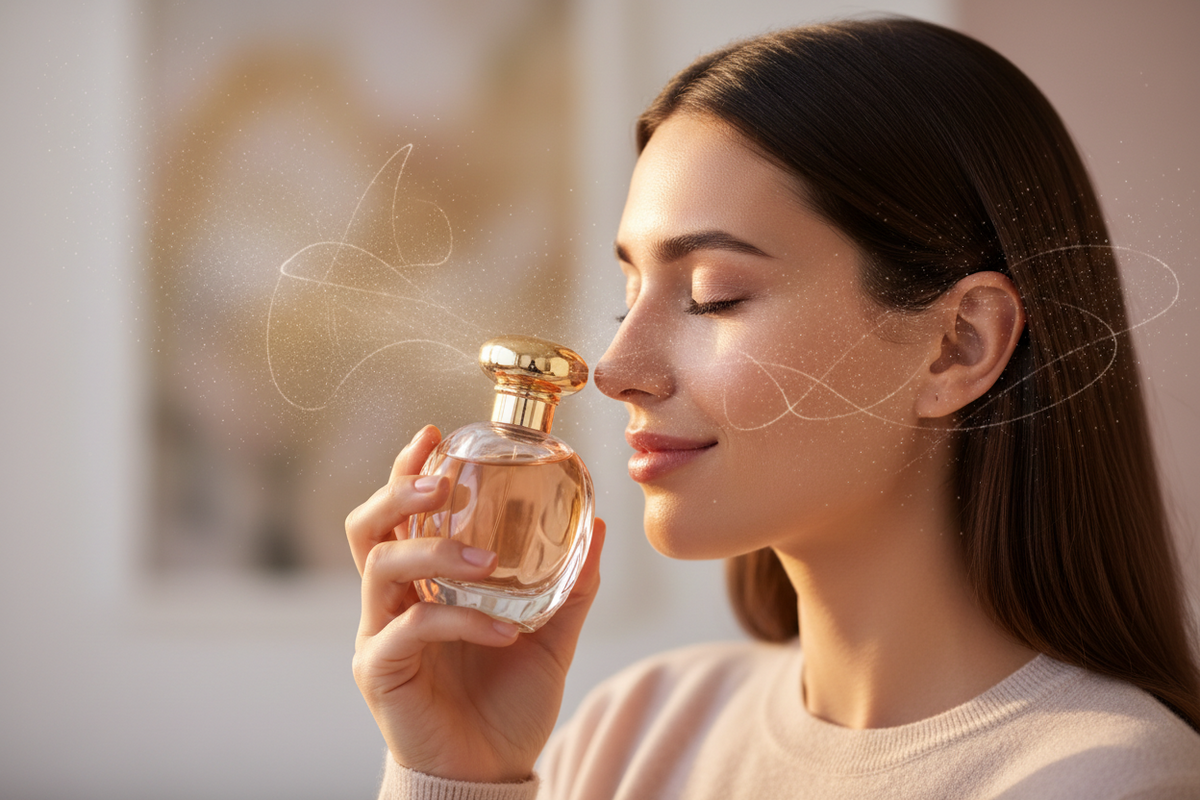
What Is Oud? A Plain-English Guide to Fragrance's Most Talked-About Note
You've smelled the word everywhere. Oud this, oud that. It's on luxury bottles costing hundreds of pounds and it's on £25 high-street sprays. So what actually is it? And is the expensive stuff worth it, or is it all hype?
Here's the honest version. Oud is one of the most misunderstood notes in perfumery. People throw the word around like it's a single smell, when really it's a whole family of woody, smoky, warm characters that behave very differently depending on what they're mixed with.
We're R3VIVE — we build fragrance discovery for people who want to know what they're smelling, not just what they're buying. So in this guide we'll break oud down properly: what it is, where it comes from, why it costs what it costs, what it actually smells like, and how to wear it without knocking out everyone in the room. No jargon. Just the stuff you'd want a knowledgeable mate to tell you.
What oud actually is
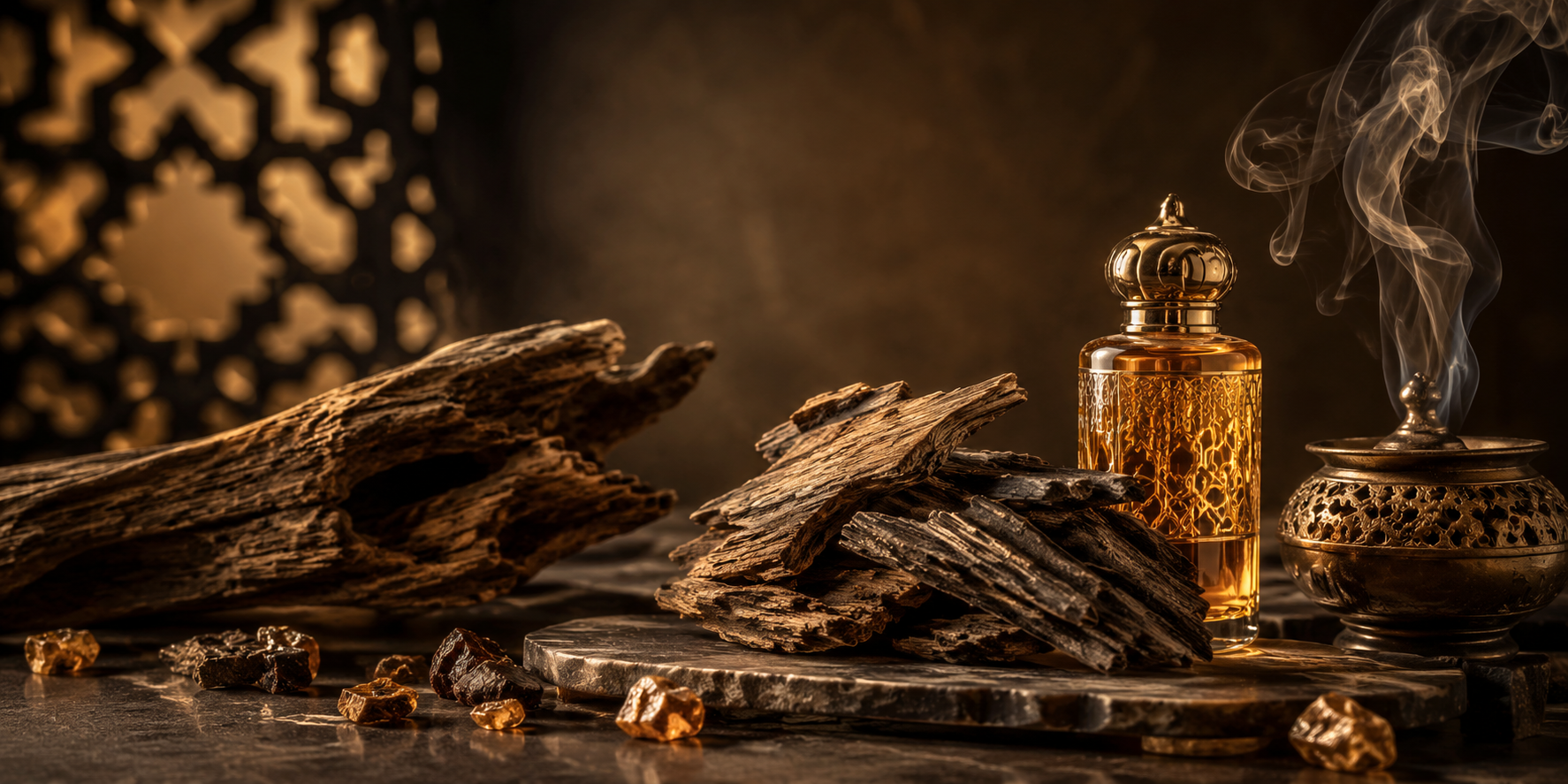
Oud starts life as wood. Specifically, the heartwood of a tree called Aquilaria, which grows across parts of Southeast Asia, India and the Middle East.
Here's the strange bit. A healthy Aquilaria tree doesn't smell of much at all. The magic only happens when the tree gets wounded or infected by a particular type of mould. To defend itself, the tree pumps out a dark, dense resin that soaks into the wood. That resin-soaked heartwood is what we call agarwood. Distil it down into an oil, and you get oud.
So oud isn't a flower you pick or a fruit you squeeze. It's a tree's immune response. The damage is the whole point — no infection, no resin, no scent.
Oud vs agarwood — same thing?
Pretty much, yes. People use the two words interchangeably and you won't be wrong if you do too.
If you want to be precise: agarwood is the resinous wood itself. Oud (sometimes spelled oudh) is the Arabic word for that wood and for the oil made from it. In everyday fragrance chat, they mean the same thing. Don't let anyone make you feel daft for using one over the other.
Why oud costs so much
Pure oud oil is one of the priciest raw materials in the entire perfume world. We're talking thousands of pounds per kilo for top grades. A few reasons stack up here.
First, rarity. Only around 2 percent of wild Aquilaria trees ever develop the resin naturally. The rest just stay ordinary wood. So you're hunting for a rare reaction in a small number of trees.
Second, the yield is tiny. It can take something like 20kg of wood to produce around 12ml of oil. Twelve millilitres. That's smaller than a perfume sample vial, from an armful of wood.
Third, the work is slow. Harvesting, grading and distilling agarwood is skilled, hands-on graft. There's no shortcut machine that spits out finished oud.
And fourth, the wild trees are running low. Aquilaria has been protected under international conservation rules (CITES) since the mid-1990s because so much of it was stripped from the wild. That protection is a good thing, but it also tightens supply and pushes prices up.
Put rarity, low yield, slow labour and conservation limits together, and you get a material that genuinely earns its reputation as liquid gold.
So is every "oud" fragrance using the real thing?
No. And this is where a lot of confusion lives.
If a fragrance costs £30 and lists oud, it is almost certainly not drenched in rare distilled agarwood oil. The maths doesn't work. What you're smelling is usually a synthetic oud accord — more on that next.
That's not a con. It's just how the modern fragrance world makes oud-style scents affordable. The trick is knowing the difference so you can set your expectations.
Synthetic oud — is it cheating?
Short answer: no.
Synthetic oud is a lab-made blend built to capture the woody, smoky, resinous feel of real oud without needing the rare oil. Perfumers reach for it constantly, and there's nothing dishonest about it.
A few things worth knowing.
Synthetic oud tends to smell cleaner and more consistent. Real oud oil varies wildly batch to batch — region, tree, infection, distillation all change the result. A synthetic accord smells the same every time, which is handy when a brand wants every bottle to match.
It also dodges the conservation problem entirely. No endangered trees involved.
And honestly, it's the reason you can own an oud fragrance at all without remortgaging. Most of the oud on shelves — high street and designer alike — is synthetic or a blend of synthetic with a touch of the real thing.
Does pure natural oud have a depth and complexity the synthetics can't fully copy? Many fragrance lovers say yes, and they're probably right. But "synthetic" doesn't mean "bad". It means accessible. For most of us starting out, a well-made synthetic oud is exactly where you want to begin.
What does oud actually smell like?
This is the question everyone really wants answered, and it's harder than it sounds — because oud doesn't smell like one thing.
Raw, traditional oud oil can be intense. Think woody and warm, with smoke, leather and a balsamic sweetness underneath. At its most natural and unfiltered, it can even go animalic — a deep, almost barnyard funk that catches first-timers off guard. That's not a fault. That's pure oud being pure oud. It's an acquired taste, and plenty of people fall hard for it.
Most oud you'll meet, though, has been softened and dressed up. Modern blends smooth that raw character into a rich, elegant wood with spice and an amber-like glow. Far easier to wear. Far more flattering in everyday life.
The words people use for oud
To give you a vocabulary, here's the range you'll hear:
- Woody — the backbone, always there
- Smoky — like incense or a campfire that's burned down
- Balsamic — warm, resinous, faintly sweet
- Leathery — rich and a bit rugged
- Sweet and fruity — usually when oud is paired with rose, berry or vanilla
- Animalic — that deep, raw, primal edge in the strongest versions
Where any given fragrance lands depends entirely on the recipe. Which brings us to the most useful thing to understand about oud.
Oud changes depending on its company
Oud is a chameleon. What sits next to it decides how it reads on your skin.
Pair oud with rose and you get the classic Middle Eastern combination — bold but romantic, woody but soft. Pair it with vanilla or amber and it turns cosy and sweet, almost dessert-like. Pair it with leather and spice and it goes dark, smoky and serious. Pair it with fruit and suddenly it's bright and modern.
So if you've smelled one oud and decided it's "not for you", don't write the whole note off. You might have just met the wrong pairing. There's a good chance a different oud blend would change your mind completely.
How to wear oud without overpowering the room
Oud is potent and it lasts. That's part of why people love it — and part of why it goes wrong. Here's how to keep it on the right side of impressive.
Go lighter than you think
One or two sprays. That's it to begin with. Oud projects and lingers, so the urge to "add a bit more" is usually a mistake. You can always build up once you know how a fragrance behaves on you.
Skin over clothes
Spray onto skin rather than fabric. Skin warms the fragrance and lets it develop properly through its stages. Heavy oud on a wool jumper can also cling for days, which you might not want.
Match it to the moment
A rich, smoky oud suits cooler evenings, autumn, winter and dressed-up occasions. In the heat of a UK summer day, a heavy oud can feel like too much. If you want oud in warm weather, reach for the lighter, fruitier or rosier blends.
Give it a full day before you judge
This is the big one. Oud is a slow burn. It can smell quite different in the first ten minutes than it does four hours later. Always test a fragrance across a whole day — on your skin, not a paper strip — before deciding. A sample or decant is perfect for this, which is exactly the kind of low-risk testing we built R3VIVE around.
Is oud right for you?
Maybe. Maybe not yet. Both are fine answers.
If you love warm, woody, characterful fragrances with presence, oud is well worth getting to know. If you tend towards fresh, light, citrusy scents, a heavy oud might feel like a lot — but a soft modern oud blend could still surprise you.
The smart move is never to buy a full bottle of oud blind. It's a strong, expensive, divisive note. Sample it first. Live with it for a day. See how it settles on your skin and whether you reach for it again. That's how you find out what you actually love, instead of what looked good in the bottle.
FAQ
What is oud in fragrance?
Oud is a dark, fragrant resin that forms inside the Aquilaria tree when it gets infected by a particular mould. The tree floods the wound with resin to protect itself, and that resin-soaked heartwood — agarwood — is distilled into oud. It's one of the most expensive raw materials in perfumery because only a small share of trees ever produce it.
What does oud smell like?
Woody, warm and balsamic, with smoky, leathery and slightly sweet edges. In its rawest form it can be animalic, almost funky. Most oud in designer and high-street fragrances is softened into a smooth, rich wood with spice and amber warmth that's far easier to wear day to day.
Why is oud so expensive?
Only around 2 percent of wild Aquilaria trees naturally produce it, the yield is tiny (roughly 20kg of wood for about 12ml of oil), extraction is slow and skilled, and wild sources are protected under CITES conservation rules. Rarity plus difficulty plus regulation equals a very high price.
Is oud the same as agarwood?
Basically, yes. Agarwood is the resin-rich wood. Oud (or oudh) is the word for that wood and the oil from it. In everyday fragrance talk they mean the same thing.
Is oud masculine or feminine?
Neither — it's a note, not a gender. Oud appears in men's, women's and unisex fragrances. How it reads depends on its pairings: oud with rose or fruit leans softer, oud with leather and spice leans bolder.
What is synthetic oud and is it worse than the real thing?
Synthetic oud is a lab-made accord that recreates oud's woody, smoky character without the cost or conservation issues. It's not worse — it's cleaner, more consistent, and the reason oud-style fragrances are affordable. Most oud you can actually buy is synthetic or a blend.
How do you wear oud without overdoing it?
Go light — one or two sprays. Apply to skin, not clothes. Save heavier blends for cooler months or evenings, and test for a full day before committing, because oud shifts a lot over several hours.
Is oud good for beginners?
A heavy traditional oud can be a lot for a first-timer. But many modern blends pair oud with rose, vanilla, fruit or amber, which makes it warm and approachable. Start with one of those softer versions — and try a sample before buying a full bottle.
Want monthly fragrance discovery without the £200 blind buys? The Vault Insider membership is built for exactly this — start for £9 (then £19/mo), members get every drop 48 hours early, and it's love-it-or-it's-free with a 30-day money-back guarantee, cancel anytime. Start for £9 →
Read this and still not sure which scent profile fits you? Take the 60-sec scent quiz → — we'll match you to one of 5 fragrance families.