What Does Tonka Bean Smell Like? The Sweet, Nutty Note in Perfume, Explained
You've seen it on half the notes lists you've scrolled past this month. Tonka bean. It sits next to vanilla, it turns up in tobacco scents, gourmands, "cosy winter" picks and a load of men's blue fragrances too. But what does tonka actually smell like? And why does a bean nobody eats end up in so many bottles?
Here's the problem. If you don't know what tonka does, you can't tell whether you'll love a fragrance that lists it, or find it sickly by lunchtime. That's how £200 blind buys happen.
So in this guide we'll break tonka down properly. What it smells like on skin. Where it comes from. The molecule doing the heavy lifting. How it's different from vanilla (people mix these up constantly). And which classic and modern fragrances show it off best, so you know what to sample first.
By the end you'll be able to read "tonka bean" on a notes list and know exactly what you're getting.
What does tonka bean smell like?
Picture vanilla, then give it a bit of grit. Tonka is sweet, warm and slightly powdery, with a nutty almond edge and a dry, hay-like side underneath. Some noses pick up cherry. Others get cinnamon, caramel or pipe tobacco.
That mix is why it's so useful. It's sweet without being purely sugary. It's warm without being heavy like resin. It sits right in the middle of everything.
The four facets you'll notice
When we smell a tonka-heavy fragrance, we tend to pick out four things:
- Almond and marzipan. The first thing most people say. Think bakewell tart or amaretto.
- Fresh-cut hay. Dry, grassy, slightly bitter. This is what stops tonka going full dessert.
- Vanilla-ish sweetness. Softer and less creamy than real vanilla.
- A tobacco and spice shadow. A faint warmth that reads almost like cinnamon or dried fruit.
Which facet you notice first depends on the fragrance around it. In a gourmand, the almond and sweetness come forward. In a fougère (more on those below), the hay side does the work.
How it changes on skin
Tonka is a base note. You won't smell much of it in the first ten minutes while citrus and spice are flying about. It shows up properly after an hour or so, then hangs around for hours, getting softer and more powdery as it dries down. If a fragrance smells "warm and sweet but I can't name it" at the four-hour mark, there's a good chance tonka is part of the reason.
Where does tonka bean come from?
Tonka is the seed of Dipteryx odorata, a big tropical tree native to South America. Most of what perfumers use comes from Venezuela and Brazil.
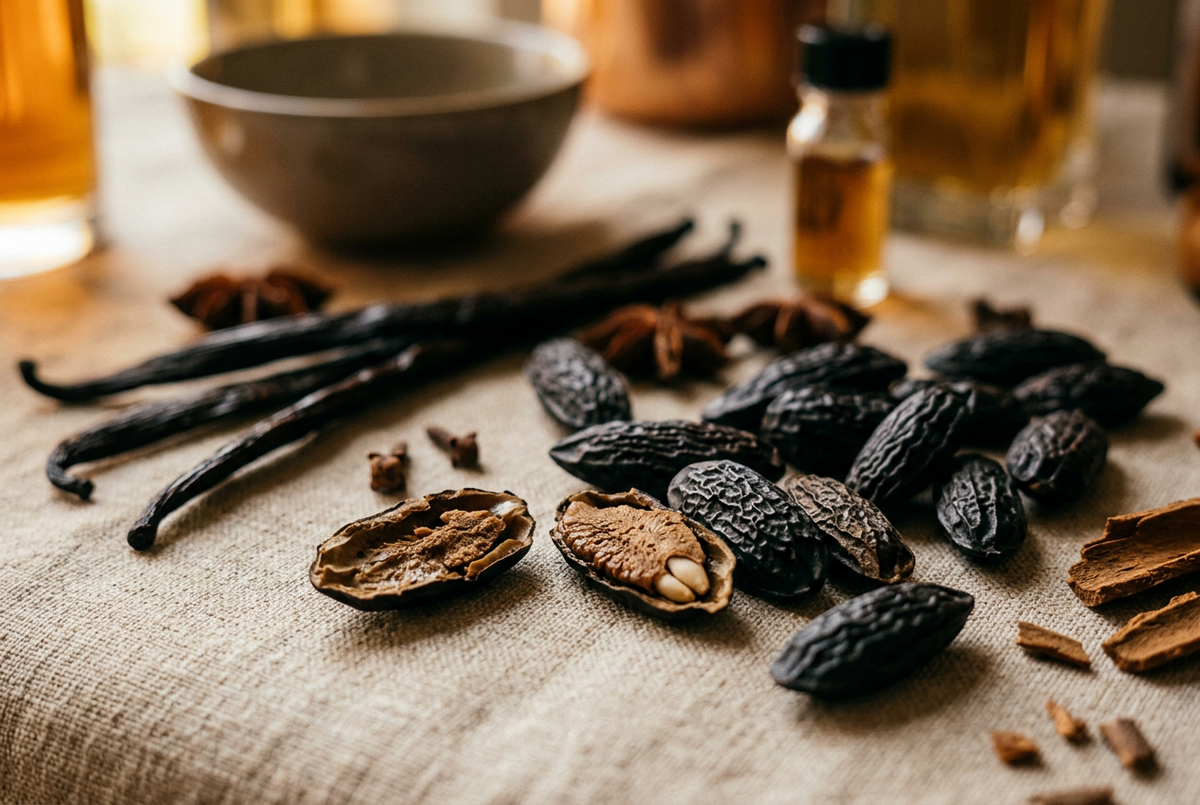
The fruit drops from the tree, the seed is pulled out and dried. Fresh, it smells of very little. The magic happens when the dried beans are soaked in alcohol (traditionally rum) and dried again. That curing brings out crystals of coumarin on the surface, and with them, the smell.
The finished beans are black, wrinkly and about the size of a fat almond. Grate one and you'll smell the whole profile in one hit.
Tonka absolute vs coumarin
In perfume you'll meet tonka in two forms:
- Tonka absolute. Extracted from the cured beans. Rich, rounded and complex, with all the almond, hay and tobacco facets.
- Coumarin. The main aroma molecule inside tonka, made in a lab. Cleaner and more focused: mostly sweet hay and almond.
Most mainstream fragrances lean on coumarin because it's consistent and affordable. Niche houses are more likely to use the absolute, or blend both. Neither is "fake". They're different tools, like using whole vanilla pods versus vanilla extract.
Coumarin: the molecule that changed perfume
It's hard to overstate how much this one molecule shaped modern fragrance.
Coumarin was first isolated from tonka beans in 1820. Then in 1868 the English chemist William Henry Perkin worked out how to make it in a lab. That was a big deal. It meant perfumers could use a natural-smelling material in any quantity, at a steady price.
In 1882, the house Houbigant released Fougère Royale, built around synthetic coumarin with lavender and oakmoss. It's often called one of the first modern perfumes, and it started a whole family: the fougère (French for "fern"). Guerlain's Jicky followed in 1889, with coumarin and vanilla wrapped round lavender.
Fast forward to today and the fougère is still everywhere. A huge share of men's fragrances, from classic barbershop scents to modern blue fragrances, are fougères at heart. Lavender up top, coumarin underneath. Every time you've smelled that "clean, sweet, a bit soapy" barbershop vibe, you've smelled coumarin.
Is tonka safe on skin?
Yes, at the levels used in perfume. Coumarin is on the EU's list of fragrance allergens that must be named on the label above a small threshold, which is why you'll sometimes see "coumarin" in the ingredients on the box. That's a labelling rule for people with known sensitivities, not a warning that it's harmful.
You might have heard tonka is banned. That's about food, not fragrance. In the US, coumarin has been banned as a food additive since 1954 because large amounts eaten regularly can affect the liver. That's why tonka is a bit of a cult ingredient with chefs in Europe and a contraband one in American kitchens. On skin, in perfume quantities, it's a different story.
Tonka vs vanilla: what's the difference?
This is the question we get most, so let's be blunt about it.
Vanilla is creamy, rounded and sweet. It smells like custard, ice cream or a warm cake. It feels soft and comforting, sometimes boozy.
Tonka is drier, nuttier and a bit more complicated. Where vanilla is cream, tonka is marzipan with a pinch of hay and spice. It has more texture and less sugar.
They're best friends in perfume. Most fragrances that use one use the other, because tonka gives vanilla some backbone and vanilla gives tonka some softness. If a vanilla fragrance ever felt too much like a candle shop to you, look for one where tonka is doing more of the work. It usually reads more grown-up.
Quick way to tell them apart
Next time you're sampling, sniff the dry-down after two hours. If it's smooth, creamy and dessert-like, vanilla is leading. If it's drier, with a powdery almond feel and something faintly like hay or tobacco, tonka is leading.
Which fragrance families use tonka?
Tonka is a team player. Here's where you'll find it doing the most.
Fougères (the barbershop family)
As above. Lavender, herbs and coumarin. Clean, sweet and classic. Think of the smell of a proper old-school barbershop. Modern versions add vanilla and ambroxan to push them sweeter and louder.
Gourmands
Tonka is one of the reasons gourmands smell edible without smelling like a sweet shop. It adds the marzipan and roasted-nut notes, and pairs well with pistachio, coffee, caramel and praline. If you liked our pistachio guide, tonka is often the thing sitting under those green, nutty openings.
Ambers and orientals
Next to labdanum, benzoin and vanilla, tonka adds warmth and a dusting of powder. It smooths out the rougher, resinous edges and makes these heavy scents easier to wear.
Tobacco and leather
Tonka's hay facet sits naturally next to dried tobacco leaf. That's why so many tobacco fragrances list it. It softens leather too, taking the edge off the smoky, animalic side.
Tonka fragrances worth sampling first
You don't need to buy any of these. You need to smell them, ideally on skin, so you know where your line is. Here's a short list that covers the full range of what tonka can do.
Tonka front and centre
- Le Labo Tonka 25. Tonka with cedar, musk and a smoky edge. Drier and woodier than you'd expect. A good test of whether you like tonka without much sugar.
- Guerlain Tonka Impériale. Tonka, almond, honey, tobacco and a gentle boozy warmth. Rich and plush. This is tonka with the dial turned up.
The classics where tonka built the structure
- Guerlain Shalimar. The famous amber with vanilla and tonka at its base. Powdery, smoky and very vintage in the best way.
- Guerlain Jicky. One of the oldest fragrances still made. Lavender, citrus and coumarin. A history lesson you can wear.
- Houbigant Fougère Royale. The modern version of the 1882 original. Smell it to understand where half of men's perfumery came from.
Modern crowd-pleasers
- Jean Paul Gaultier Le Male. Lavender, mint and vanilla, with tonka underneath. A fougère that went sweet, and it's the reason a whole generation thinks "lavender + vanilla" smells like a night out.
- Tom Ford Tobacco Vanille. Tobacco leaf, vanilla, cocoa and tonka. Dense, sweet and very much a winter scent.
Smell a fougère, a gourmand and a straight tonka side by side and you'll learn more about this note in ten minutes than a hundred reviews will teach you.
How to wear tonka (and when)
Tonka is a cold-weather note for most people. Its warmth and sweetness bloom in heat, which can feel cloying in July but feels like a blanket in November.
A few things we've learned from wearing it a lot:
Go lighter than you think. Tonka fragrances tend to be long-lasting and fairly dense. Two or three sprays is plenty. If you're in a warm office, one on the chest under a jumper works well.
Use it to fix fragrances that feel too thin. Layering is fair game. A simple tonka or vanilla-tonka scent underneath a fresh citrus or woody fragrance can add warmth and stretch its longevity. Spray the heavier one first.
Watch the sugar stack. Tonka plus vanilla plus caramel plus praline can tip into headache territory fast. If you know you find gourmands heavy, look for tonka paired with woods, lavender or iris instead.
It's not a gendered note. Tonka shows up in barbershop fougères marketed to men and in sweet gourmands marketed to women. The note doesn't care. Wear whatever you like the smell of.
Who usually loves tonka
If you already like vanilla, amber, tobacco or cosy gourmands, you'll very likely get on with tonka. If you mostly wear fresh citrus, aquatic or green fragrances, try a fougère first. You get tonka's warmth but with lavender and herbs keeping it light.
Reading "tonka" on a notes list
Notes lists are marketing as much as chemistry, so here's how we read them.
If tonka is listed in the base alongside vanilla and musk, expect a soft, warm dry-down that's sweeter than the opening suggests. If it's next to lavender or geranium, you're looking at a fougère. Expect clean, sweet, barbershop. If it's next to coffee, cacao, praline or pistachio, it's a gourmand and it'll lean edible.
And if the fragrance description says "coumarin" instead of tonka? Same family of smell, usually a cleaner, more focused version.
The more fragrances you smell with tonka in them, the faster you'll recognise it. Within a few samples you'll start catching it in things you already own.
FAQ: tonka bean in perfume
What does tonka bean smell like in perfume?
Tonka smells sweet, warm and slightly powdery, with notes of almond, marzipan, vanilla, fresh hay and a hint of tobacco or cinnamon. It's drier and nuttier than vanilla.
Is tonka bean the same as vanilla?
No. They come from different plants and smell different. Vanilla is creamy and custard-like. Tonka is drier, nuttier and more complex, with almond and hay facets. They're often used together.
What is coumarin?
Coumarin is the main aroma molecule in tonka beans. It smells of sweet hay and almond. It was first made in a lab in 1868 and became the base of the fougère fragrance family.
Why is tonka bean banned?
Tonka isn't banned in perfume. Coumarin has been banned as a food additive in the US since 1954 because eating large amounts regularly can harm the liver. In fragrance it's used safely and is listed as a labelled allergen in the EU.
Is tonka a masculine or feminine note?
Neither. It's used in classic men's fougères and in sweet women's gourmands. It's a warm, sweet note anyone can wear.
Is tonka good for winter?
Yes. Tonka's warmth and sweetness work best in cold weather. In hot weather it can feel heavy, so use fewer sprays or choose a fragrance where it's paired with fresh notes.
How long does tonka last on skin?
Tonka is a base note, so it's one of the longest-lasting parts of a fragrance. In most perfumes you'll still smell it six hours or more after spraying.
What notes go well with tonka?
Vanilla, lavender, tobacco, almond, coffee, amber, sandalwood, iris and pistachio all pair well with tonka. It also softens leather and smoky notes.
What is the best tonka bean perfume?
It depends on what you want. Le Labo Tonka 25 shows a dry, woody tonka. Guerlain Tonka Impériale is rich and sweet. Guerlain Shalimar and Jicky are the classics. Sample a few before buying a full bottle.
Want monthly fragrance discovery without the £200 blind buys? The Vault Insider membership is built for exactly this — start for £9 (then £19/mo), members get every drop 48 hours early, and it's love-it-or-it's-free with a 30-day money-back guarantee, cancel anytime. Start for £9 →
Read this and still not sure which scent profile fits you? Take the 60-sec scent quiz → — we'll match you to one of 5 fragrance families.