The R3VIVE Reference
INSIDER ONLY · v1 · 27 MAY 2026
Built for Vault Insiders. A growing reference to help you actually understand what you're spraying — not just chase names. We'll expand this. If there's a note, accord, or topic you want covered, reply to any of our emails. It goes straight to Daz + Pui.
Why this exists
Most fragrance writing is either a perfumer's chemistry textbook or an influencer's hype reel. Neither helps you walk into a department store, sample 5 bottles, and know which one is actually you.
This is the thing we wish existed when we were starting out. The basics — but the real basics. The stuff that takes years of hands-on wearing to learn, distilled into something you can read in an afternoon.
It's yours, free, as part of being a Vault Insider. Use it. Argue with us. Email us when you find something we got wrong.
— Daz + Pui
1. The Fragrance Family Map
Almost every fragrance you'll ever wear sits inside one of 8 families. Knowing the family tells you ~70% of what a fragrance will smell like before you ever spray it.
Citrus / Hesperidic
Bright, sharp, optimistic. Lemon, bergamot, orange, grapefruit. Wakes you up. Disappears fast on skin (citrus is volatile — it's the first thing to evaporate). Best as a morning fragrance, summer wear, or as an opening note layered with something deeper.
Try: Acqua di Parma Colonia. Tom Ford Neroli Portofino. Hermès Eau d'Orange Verte.
Floral
The single biggest family. Rose, jasmine, lily, neroli, peony, gardenia, tuberose. Soft to opulent. Often (but not always) feminine-coded. Can be airy and powdery (peony, lily of the valley) or rich and indolic (jasmine, tuberose, gardenia).
Try: Chanel No. 5. Diptyque Do Son. Frédéric Malle Carnal Flower.
Oriental / Amber
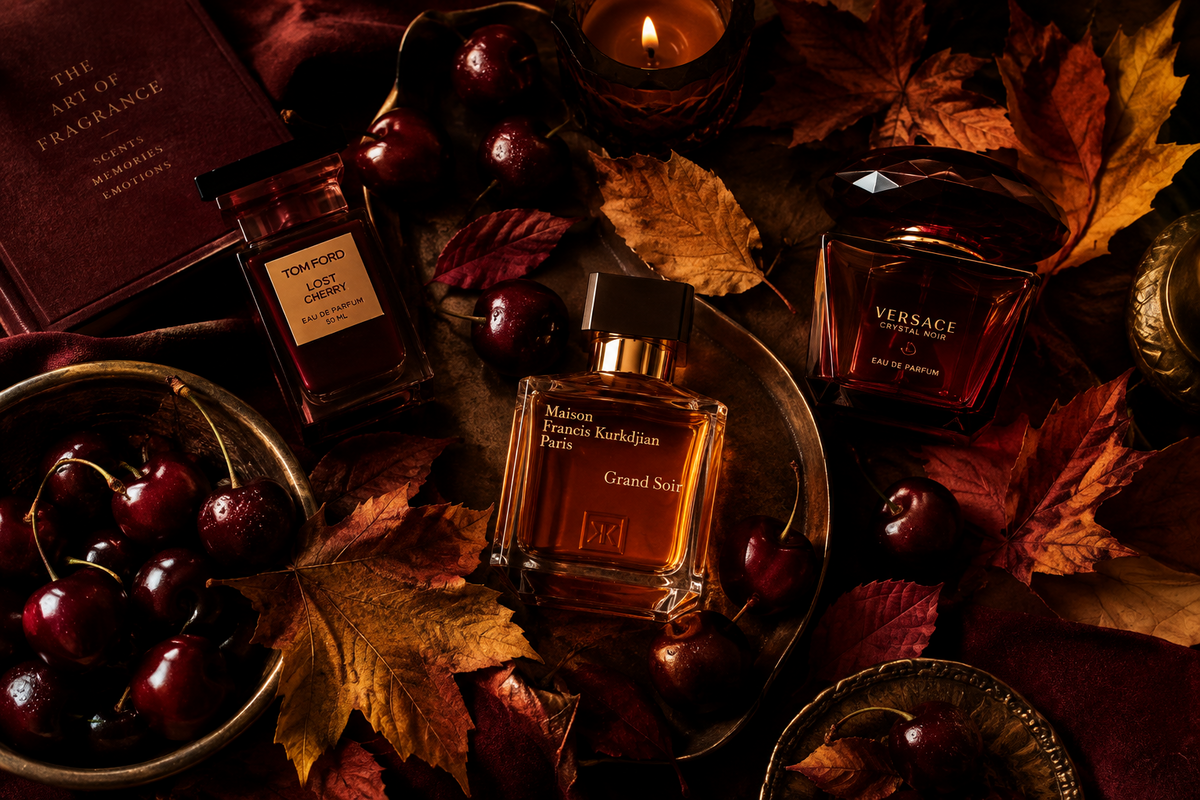
Warm, sweet, resinous. Vanilla, amber, benzoin, labdanum, spices. Often described as 'comforting' or 'skin-like'. Great for autumn, winter, and evening wear. Heavy projection, long sillage.
Try: YSL Black Opium. Tom Ford Tobacco Vanille. Mugler Angel.
Woody
Cedar, sandalwood, vetiver, patchouli, oud. Dry, grounding, often considered the most 'mature' family. Works year-round but especially good in cooler weather. Can lean dry-and-smoky or creamy-and-warm depending on the wood.
Try: Le Labo Santal 33. Tom Ford Oud Wood. Comme des Garçons Wonderwood.
Chypre
A classic structure: citrus top → floral or fruity heart → oakmoss + labdanum base. Sophisticated, slightly bitter, often described as 'elegant' or 'old-world'. Modern restrictions on oakmoss have made true chypres rare — most newer ones are 'modern chypres' using synthetic substitutes.
Try: Mitsouko by Guerlain. Aromatics Elixir by Clinique. Chanel Cristalle.
Fougère
The 'barbershop' family. Lavender + oakmoss + coumarin (tonka bean), often with bergamot on top. Classically masculine-coded but increasingly worn by everyone. Clean, herbaceous, mature.
Try: Azzaro Pour Homme. Drakkar Noir. Penhaligon's English Fern.
Gourmand
Edible notes — vanilla, caramel, chocolate, coffee, honey, almond. Sweet, often comforting. Can lean sophisticated (Maison Margiela Replica By the Fireplace) or dessert-cabinet (Thierry Mugler Angel).
Try: Thierry Mugler Angel. Maison Margiela Replica By the Fireplace. Kayali Vanilla 28.
Aquatic / Fresh
Marine, ozonic, clean. Calone is the synthetic that defined this family in the 1990s. Reads as 'shower-fresh', 'after-rain', 'ocean'. Great in heat, but can read as generic if poorly composed.
Try: Acqua di Gio Profumo. Issey Miyake L'Eau d'Issey. Davidoff Cool Water.
2. The 60-Second Pyramid
Every fragrance has three stages. You're not smelling the same thing in minute 1 as you are in hour 4.
Top notes (minutes 0–15)
What you smell when you first spray. Usually citrus, fruit, light herbs, aldehydes. Volatile — they evaporate fast. Important: the top is NOT what the fragrance is. It's the opening. Department stores trick you by selling you on the top. The real fragrance shows up after 30 minutes.
Heart notes (minutes 15–60)
The body of the fragrance. Florals, spices, herbs. This is what you'll smell for most of the wear. The heart is the personality.
Base notes (minutes 60+)
What's left after the rest has faded. Woods, musks, resins, oakmoss, amber, vanilla. The base is the longest-lasting part. The 'dry-down' — what you go to sleep smelling like.
How to actually test a fragrance
- Spray it on your skin (wrist, inner elbow). Not a paper strip. Skin chemistry is everything — paper lies.
- Walk away for an hour. Run errands. Have a coffee. The first 15 minutes is the worst time to judge a fragrance.
- Come back to it. Does it still smell good to you when you're not focusing on it?
- Sleep on it. Wear it for a full day. The dry-down is when you find out if you actually love it.
This is exactly why the Vault decants are 8ml — enough to wear for 2 weeks of real life, not 2 minutes in a shop.
3. Common Notes Decoded
The 30 notes you'll see most often, in one line each.
Top-note region
- Bergamot — Italian citrus, slightly bitter, the most-used top note in perfumery. The 'earl grey tea' smell.
- Lemon — sharp, clean, optimistic. Fades fastest.
- Orange — sweeter than lemon, slightly sticky, sunshine in a bottle.
- Grapefruit — citrus with a bitter edge, modern and sporty.
- Neroli — orange blossom, but sharper and more bitter than the floral version.
- Mandarin — soft, sweet, slightly powdery. The 'easy' citrus.
- Black pepper — bright, peppery, often used to spice up an opening.
- Cardamom — warm, slightly minty, very versatile.
Heart-note region
- Rose — the most-used floral. Can be powdery, jammy, fresh, or smoky depending on the rose.
- Jasmine — heady, indolic (slightly animalic), almost narcotic. Hot-weather flower.
- Lavender — herbal, clean, classic barbershop. The backbone of fougère.
- Iris / Orris — powdery, rooty, suede-like. Expensive, melancholic, very grown-up.
- Lily of the Valley — clean, green, soapy. Pure spring.
- Ylang-ylang — tropical, banana-creamy, sweet floral.
- Tuberose — heady, narcotic, 'white floral' intense.
- Geranium — rose-adjacent but herbier and more masculine-coded.
- Saffron — leathery, slightly sweet, used a lot in modern niche.
Base-note region
- Sandalwood — creamy, milky, soft wood. Indian (Mysore) is the gold standard but rare.
- Cedar — dry, pencil-shavings, sharper than sandalwood.
- Vetiver — earthy, grassy, slightly smoky. The base of many men's classics.
- Oud / Agarwood — divisive Middle Eastern resinous wood. Smoky, animalic, leathery. Polarising.
- Patchouli — earthy, slightly mouldy, hippie-era classic. Modern patchouli is more refined.
- Vanilla — sweet, warm, gourmand. Real vanilla is darker and woodier than the synthetic 'ice cream' version.
- Amber — warm, resinous, 'skin-like'. Not a single ingredient — a blend that creates the amber accord.
- Musk — clean, slightly animalic, often synthetic. The 'fresh laundry' effect in many modern fragrances.
- Tonka bean — sweet, almond-vanilla-coumarin. Foundation of fougère bases.
- Oakmoss — earthy, damp-forest, slightly bitter. The chypre base note. Now regulated.
- Labdanum — warm, ambery, leathery resin from rockrose. Often paired with oakmoss.
- Leather — can be smoky, suede-y, or birch-tar harsh.
- Tobacco — sweet, dried-leaves, often paired with vanilla or honey.
- Ambergris — warm, salty, marine-animalic. Real ambergris is rare; most fragrances use synthetic substitutes (Ambroxan).
4. Layering Basics
When two fragrances are designed to be worn together, layering works. When they're not, you usually end up smelling like neither — or worse, like both, fighting.
When to layer
- When you want to extend a fragrance whose base is weak (spray a stronger base under a lighter top fragrance)
- When you want to personalise (layer one floral under a citrus to give it a unique signature)
- When seasons change and you want to bridge — adding a warmer base to a summer scent for autumn
When NOT to layer
- Two heavy fragrances. You'll just create a wall of scent.
- Two fragrances from clashing families (gourmand + aquatic = nobody wins)
- More than two fragrances at once. That's not layering. That's confusion.
Three sample combos to try
- Daytime / fresh: A citrus EDT on the chest, sandalwood-based fragrance on the neck. The sandalwood anchors it through the afternoon as the citrus fades.
- Evening / sophisticated: A clean floral on the wrists, an oud or vanilla-amber on the chest. The floral lifts, the base grounds.
- Cold weather: A spicy oriental as the base, a soft amber-vanilla over it. Wears like a blanket.
The rule of thumb: lighter on top, heavier on bottom. Spray the heavier base fragrance first. Let it dry 60 seconds. Then layer the lighter one over it.
5. The R3VIVE Glossary
The terms you'll see in our descriptions, in product reviews, and in fragrance writing generally.
- Accord — A combination of notes that creates a single recognisable smell. 'Amber' isn't a single ingredient — it's an accord built from several. Same with 'ocean' or 'leather'.
- Dry-down — What the fragrance smells like after the top + heart have faded. The base notes phase. Usually 2-4 hours in.
- Eau de Toilette (EDT) — Lower concentration of fragrance oil (~5-15%). Lighter, shorter wear (3-5 hours typically).
- Eau de Parfum (EDP) — Higher concentration (~15-20%). Richer, longer wear (5-8 hours).
- Parfum / Extrait — Highest concentration (~20-40%). Most intense, longest wear, usually most expensive.
- Sillage — French for 'wake'. The trail your fragrance leaves behind when you walk through a room. Strong sillage = people notice you after you've passed.
- Projection — How far the fragrance throws from your skin. High projection = noticeable from a metre away. Low projection = a 'skin scent'.
- Longevity — How long it lasts on your skin. Affected by your skin type, the weather, and the fragrance composition.
- Top / Heart / Base — The three phases of how a fragrance unfolds. See section 2.
- Nose — Slang for a perfumer. Also used to describe someone who's good at identifying notes.
- Niche — Smaller, independent perfume houses (Maison Francis Kurkdjian, Amouage, Parfums de Marly, Le Labo). Usually more expensive, often more interesting compositions.
- Designer — Big-name fashion-house fragrances (Tom Ford, YSL, Dior, Chanel, Versace). More mainstream, usually wider availability.
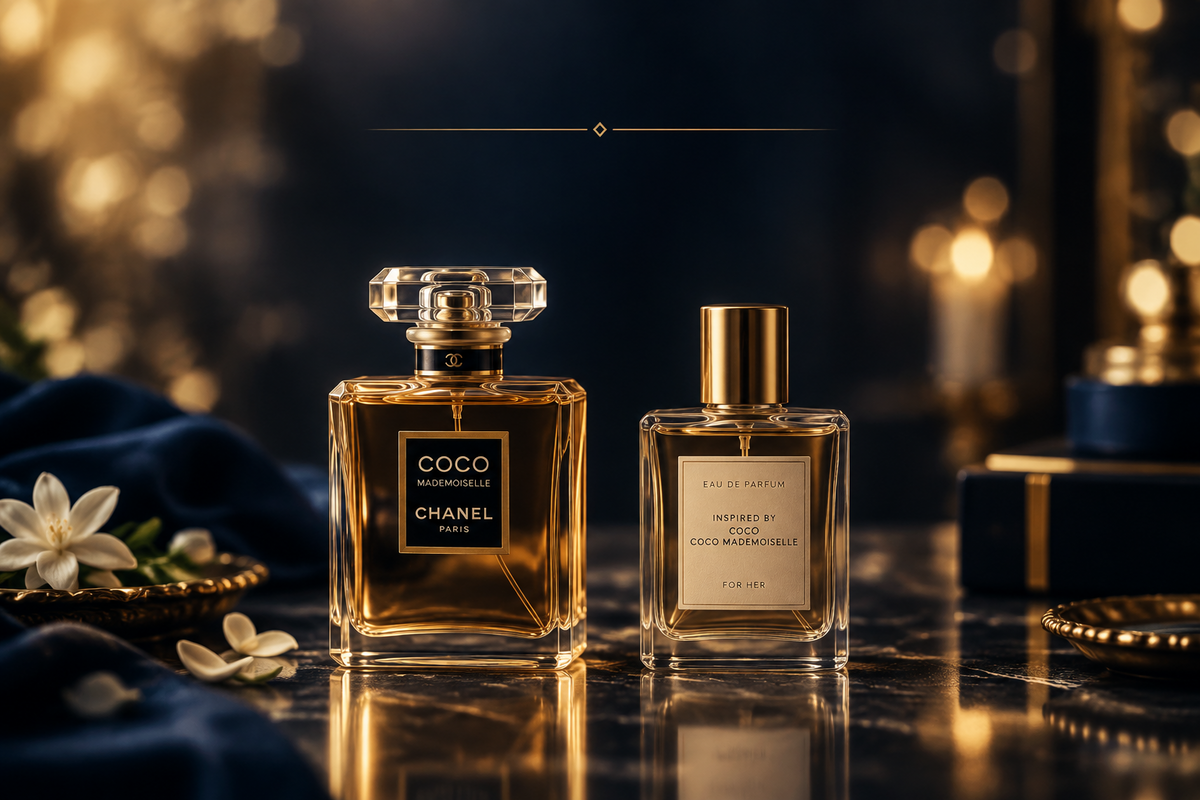
- Clone — A fragrance designed to smell similar to an expensive original. Quality varies massively.
- Batch variation — Real perfumery uses natural ingredients that vary from harvest to harvest. Two bottles of the same fragrance can smell slightly different.
- Decant — A smaller portion of a fragrance, usually 5-10ml, decanted from a larger bottle. What the Vault sends every month.
- Atomiser — A spray bottle. Our 8ml atomisers are travel-sized refillables.
- Skin chemistry — How your individual skin (pH, oil content, diet, body temperature) changes how a fragrance smells on you. See section 6.
- Opening — The first phase. The top notes. The first 5-15 minutes.
- Settle — When a fragrance has finished evolving and reached its dry-down. Usually 1-2 hours in.
6. Skin Chemistry — Why a Fragrance Smells Different on You
The same bottle, on two different people, can smell like two different fragrances. Here's why.
1. Skin pH. Skin acidity varies person to person. Slightly more acidic skin amplifies certain notes (citrus, fruit). Slightly more alkaline skin amplifies others (musks, woods).
2. Skin oil. Oilier skin holds fragrance longer and projects more. Drier skin loses sillage faster. (This is why a fragrance can feel 'weak' on you when it's strong on someone else.)
3. Body temperature. Warmer bodies project more. Same fragrance on a hot summer day vs a winter morning smells different — because your skin is releasing the molecules at different rates.
4. Diet + lifestyle. Spicy food, alcohol, stress, hormones — all change how your skin interacts with fragrance over weeks. Not just the day.
Practical implication: never buy a fragrance based on how it smells on a paper strip, on someone else, or on YouTube. Test on YOUR skin. For at least an hour. Ideally a full day.
This is why our Vault decants are 8ml — that's about 60 wears. Enough to know if it actually works on you, not just on a stranger.
7. Storage + Care
Fragrances aren't immortal. Heat, light, and air break them down. Here's how to make yours last.
Don't store in the bathroom. Steam + temperature swings = the fastest way to ruin a fragrance. Yes, even though 'bathroom' looks like the obvious spot. Move them out.
Keep them in the dark. UV breaks down fragrance molecules. A drawer, a cupboard, or a box on a shelf away from the window.
Stable temperature. Ideal is around 15-18°C. Cold isn't a problem. Heat is. Don't keep a bottle in a car. Don't leave it on a windowsill.
Don't shake them. Shaking introduces air and breaks down delicate top notes. Treat them like wine, not cocktails.
Original box if you have it. Light protection, plus a barrier against temperature swings.
Shelf life: an unopened fragrance lasts 3-5 years easily if stored well. An opened one starts to oxidise over 1-3 years — the top notes go first, the base lasts longest. If your fragrance smells 'off' or 'sour' on the opening but normal in the dry-down, the top has gone but the rest is fine.
8. What's next
This is v1. We'll expand it. Coming in v2:
- A deeper 'How to Choose' guide for first-time buyers
- A R3VIVE Curators' Picks — fragrances Daz + Pui personally rate, with full breakdowns
- The 'Layering Lab' — specific pairings we've tested
- Member-submitted notes (your finds, your patterns, with credit)
If there's something you want covered — a note, a brand, a question — reply to any of our emails. Goes straight to us.
— Daz + Pui