What Is Ambroxan? The Note Hiding in Half the Fragrances You Own
If you've bought a designer fragrance in the last ten years, you've worn ambroxan. You just might not have known its name.
It's the warm, salty, skin-like hum underneath Sauvage. It's the "clean but sexy" glow people keep chasing and can't quite describe. And it's quietly become the single most-used ingredient in modern perfumery - to the point where some people now say a scent smells "too 2020s" because of it.
So what actually is it? Why is it everywhere? And how do you know if you're one of the people who literally can't smell it?
We get asked about ambroxan constantly. Here's the plain-English breakdown — what it is, what it smells like, why perfumers love it, and how to use that knowledge so you stop wasting money on blind buys.
Ambroxan, in one sentence
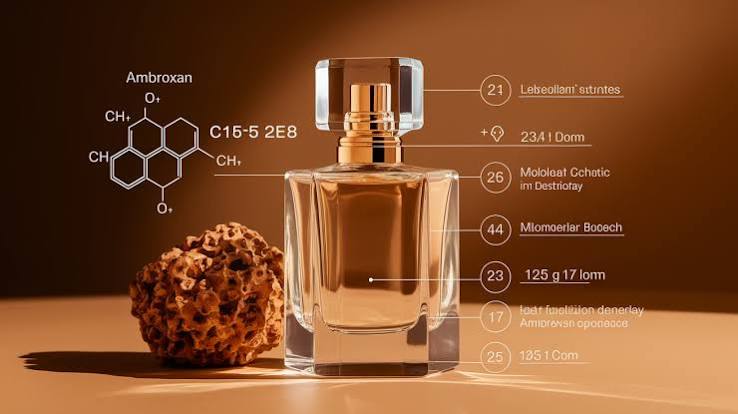
Ambroxan is a lab-made ingredient that copies the smell of ambergris — a rare, waxy substance that comes from sperm whales.
That's the whole thing. But the backstory is worth knowing, because it explains why ambroxan smells the way it does.
The whale connection (yes, really)
Ambergris is one of the oldest luxury ingredients in perfume. For centuries it washed up on beaches, aged by sun and saltwater, and perfumers paid fortunes for it. It smells warm, salty, animalic and weirdly clean all at once — like the sea, skin and old wood had a baby.
The problem? It comes from whales. It's rare, wildly expensive, ethically messy, and the quality is all over the place.
So chemists went looking for a way to bottle that smell without the whale. In the 1950s they worked out that one specific molecule did most of the heavy lifting. That molecule, made in a lab, is ambroxan.
Natural roots, synthetic delivery
Here's a detail most people get wrong: ambroxan isn't some cheap "fake" chemical with no heritage. The molecule exists in real ambergris. The lab version is the same compound, just produced cleanly and consistently — often starting from clary sage, a plant.
So when someone sneers at "synthetic ambroxan," they're missing the point. It's a precise copy of a natural luxury note, made affordable. That's a win, not a cheat.
What does ambroxan actually smell like?
This is where it gets tricky, because ambroxan doesn't smell like a "thing" the way vanilla or rose does.
Most people describe it as:
- Warm and dry — like sun on skin
- Slightly salty — a faint sea-air saltiness
- Woody — soft, smooth, no sharp edges
- Musky and skin-like — clean, almost like fresh sweat in a good way
Notice what's missing: sweetness. Ambroxan is not sweet. That's a big part of why it reads as "expensive" and grown-up rather than candy-shop.
It's a texture more than a smell
The best way to think about ambroxan is as a glow, not a note. It doesn't shout. It sits close to the skin and makes everything around it feel rounder, warmer and more polished.
That's exactly why perfumers love it — and exactly why beginners struggle to name it. You're not meant to smell "ambroxan." You're meant to smell a fragrance that feels rich and skin-hugging, and ambroxan is doing that work in the background.
Why is ambroxan in everything?
Walk down any fragrance counter and you'll find ambroxan in a huge share of the bottles. There are four solid reasons for that.
1. It smells luxurious for very little money
Real ambergris costs a fortune. Ambroxan delivers a big chunk of that same warm, salty, skin-like effect for pennies by comparison. For a brand trying to make a £60 fragrance smell like £200, that's gold.
2. It lasts
Ambroxan is a heavy molecule. It clings to skin for hours and helps anchor lighter notes that would otherwise vanish. If you've ever noticed a fragrance that's still going strong eight hours later with a soft skin-scent, ambroxan is often the reason.
3. It boosts projection
It doesn't just last — it pushes. Ambroxan helps a scent throw off your skin so people catch it as you move. Perfumers use it to crank up that "trail" without making a fragrance heavier or louder up close.
4. It plays nicely with everything
Fresh aquatics, woody scents, gourmands, florals — ambroxan slots into all of them without clashing. It's the perfumer's equivalent of a great session musician. Hand it almost any track and it makes the whole thing sound better.
Put those four together and you get an ingredient that's cheap, long-lasting, powerful and universal. No wonder it took over.
The famous fragrances built on ambroxan
A few scents are basically ambroxan showcases. Smell these and you'll start recognising the note everywhere.
Dior Sauvage
The big one. Sauvage made ambroxan a household effect, even if buyers never learned the word. That fresh-but-warm, peppery, skin-hugging dry-down? Heavy ambroxan. It's one of the best-selling men's fragrances on the planet, which tells you how much people love the effect.
Juliette Has a Gun — Not a Perfume
The name is the joke: it's built almost entirely around one ingredient — Cetalox, a close cousin of ambroxan. If you want to learn what ambroxan smells like on its own, this is the cleanest way to do it. Spray it, wait, and that warm salty skin-scent is the molecule, naked.
The wider wave
Dior Homme Intense, countless Armani, Versace and Lattafa releases, and most "blue" fresh-spicy designer scents lean on ambroxan. Once your nose locks onto it, you'll catch it in fragrance after fragrance — and you'll understand why so many modern scents share that same comfortable, skin-like base.
The thing nobody warns you about: ambroxan anosmia
Here's the plot twist that catches people out.
A meaningful number of people can't fully smell ambroxan. Their nose is partly "blind" to that specific molecule. It's called anosmia, and for musky-ambery materials it's surprisingly common.
What it feels like
You spray Sauvage. Your mate says you smell incredible. You smell… almost nothing. A faint freshness for ten minutes, then it seems to disappear.
That's not a weak fragrance and it's not a fake. Your nose simply isn't picking up the ingredient doing most of the work. To everyone around you it's still projecting beautifully.
Why it matters for buying
If you keep buying fresh designer scents and they all "die" on you in twenty minutes, ambroxan anosmia is a likely culprit. The fix isn't more sprays — it's choosing fragrances that lean on notes you can actually smell. Knowing this about your own nose saves you a fortune.
Ambroxan vs amber — clearing up the confusion
These two get mixed up constantly because the names rhyme and both trace back to ambergris. They're not the same.
Amber
"Amber" in perfume is usually a sweet, warm, cosy blend — typically labdanum and vanilla. Think snug, golden, slightly sweet. It's a vibe built from several ingredients.
Ambroxan
Ambroxan is a single ingredient and it's dry, not sweet. Salty, woody, skin-like. Where amber wraps you in a warm sweet blanket, ambroxan gives you clean warm skin.
Quick rule of thumb: if it smells sweet and snug, that's amber. If it smells like warm, salty, expensive skin, that's ambroxan.
Cetalox, Ambroxide, Ambrox — why one note has ten names
Start reading fragrance reviews and you'll trip over a pile of similar-looking words: ambroxan, ambroxide, Cetalox, Ambrox, Amberlyn. It looks like ten different ingredients. Mostly it isn't.
These are very close chemical relatives or straight-up brand names for the same family of molecule. Ambroxan is the most common name. Cetalox is a trade name for an almost identical material made by a different company. Ambroxide is the older chemical name. They smell so alike that for everyday purposes you can treat them as one thing.
Why does it matter? Because brands and reviewers use the names loosely, and you don't want to think you're chasing some exotic rare note when it's the same warm salty skin-scent under a fancier label. If a fragrance lists any of these, expect that signature ambroxan glow. One effect, many names — don't let the labelling fool you into overpaying.
How to use this when you're shopping
Knowing the note is one thing. Spending smarter is the point. Three takeaways:
Test ambroxan-heavy scents on skin, never paper. Ambroxan comes alive with your warmth and oils. On a paper strip it can smell thin and flat, so you'll underrate it. On skin it blooms. Judge it where you'll actually wear it.
Give it time. Ambroxan is a base-note effect. The first ten minutes of a fragrance is the opening — the ambroxan glow shows up later in the dry-down. Don't decide in the shop. Wear it for a few hours.
Learn your own nose. If salty-skin scents read as "nothing" on you, you may be anosmic to ambroxan — and that's worth knowing before you drop £90 on another bottle that'll feel weak. Lean toward fragrances built on notes you clearly smell.
The honest truth: ambroxan is brilliant, but it's so common now that a lot of designer scents smell a bit samey because of it. Once you can spot it, you start craving fragrances that do something different — and that's exactly when discovery gets fun.
Frequently asked questions
What is ambroxan?
A man-made aroma ingredient that recreates the warm, salty, woody-musky smell of ambergris (a rare substance from sperm whales). It's one of the most-used ingredients in modern perfumery because it smells expensive, lasts a long time, and works in almost any fragrance family.
What does ambroxan smell like?
Warm, dry, slightly salty and woody, with a clean musky skin-like quality. People often say it smells like sun-warmed skin or clean sweat — amber without the sweetness. It's more of a texture and a glow than a loud, obvious scent.
Is ambroxan the same as amber?
No. Amber is usually a sweet, warm blend of labdanum and vanilla. Ambroxan is a single ingredient that smells dry, salty and woody, not sweet. The names rhyme and both link back to ambergris, but they smell different and do different jobs.
Why is ambroxan in so many fragrances?
It's cheap compared to natural ambergris, smells luxurious, lasts for hours, and blends invisibly into almost any composition. It also boosts projection and makes other notes feel rounder, so perfumers reach for it constantly — especially in designer releases from around 2015 onward.
Is ambroxan safe to wear?
Yes. It's a widely used, regulated fragrance ingredient found in thousands of perfumes. As with any material, a small number of people can be sensitive to it, but for most wearers it's perfectly safe on skin at the levels used in finished scents.
Which famous fragrances use ambroxan?
Dior Sauvage is the headline example. It's also central to Juliette Has a Gun Not a Perfume (built almost entirely around it), Dior Homme Intense, and a massive share of fresh and woody designer scents from the last decade.
Why can't I smell ambroxan on some people — or myself?
Some people have a partial anosmia to certain musky-ambery molecules, so they genuinely can't pick up ambroxan well or at all. If an ambroxan-heavy fragrance smells like almost nothing on you, your nose may be blind to that specific molecule. It's normal and common.
Does ambroxan smell better on skin or paper?
Skin, every time. Ambroxan reacts with your warmth and natural oils, which is where its salty, skin-like glow comes alive. On paper it can smell flat. That's the best reason going to test ambroxan-heavy scents on your own skin before you buy.
Want monthly fragrance discovery without the £200 blind buys? The Vault Insider membership is built for exactly this — start for £9 (then £19/mo), members get every drop 48 hours early, and it's love-it-or-it's-free with a 30-day money-back guarantee, cancel anytime. Start for £9 →
Read this and still not sure which scent profile fits you? Take the 60-sec scent quiz → — we'll match you to one of 5 fragrance families.