What Does Patchouli Smell Like? The Earthy Note in Perfume, Explained
Say "patchouli" to most people and they picture a 1970s festival field. Joss sticks. Tie-dye. A smell that clings to a coat for a week.
So it's a bit of a shock to learn patchouli sits inside a lot of the world's best-selling perfumes. Chanel Coco Mademoiselle. Mugler Angel. Lancôme La Vie Est Belle. A lot of people who swear they "can't stand patchouli" have been wearing it for years without knowing.
That gap is the problem. If you don't know what patchouli smells like on its own, you can't spot it on a notes list, and you end up blind-buying bottles that turn muddy or musty on your skin. Or you skip brilliant ones because the word puts you off.
This guide fixes that. We'll walk you through what patchouli actually smells like, where it comes from, why it smells so different from one perfume to the next, and how to tell if it suits you before you spend proper money.
What patchouli actually smells like
Start with the honest version. Raw patchouli oil smells earthy, damp and dark. Think of a forest floor after rain, a cellar, wet leaves, a handful of soil. There's a sweet side underneath, a bit like cocoa or dried fruit, and a slightly medicinal, camphor edge on top.
That's a lot going on for one ingredient. Which is exactly why perfumers love it.
The four faces of patchouli
When you smell patchouli in a finished perfume, you're usually picking up one or two of these sides more than the others:
- Earthy and damp. Soil, roots, moss, a wine cellar. This is the "hippie" side people remember.
- Woody and dry. Like cedar or a pencil shaving, but darker.
- Sweet and chocolatey. Cocoa powder, dark chocolate, a hint of liquorice. This is the side gourmand perfumes lean on.
- Camphor and minty. A cool, slightly medicinal lift. Makes sense when you learn the plant is a member of the mint family.
Why people describe it so differently
Ask five people what patchouli smells like and you'll get five answers. "Dirt." "Chocolate." "My nan's wardrobe." "Expensive." They're all right. Which side you notice depends on the quality and type of the oil, what it's been blended with, and your own nose. Some people are more sensitive to the musty, earthy molecules in it, and to them patchouli will always read as "damp".
Where patchouli comes from
Patchouli (Pogostemon cablin) is a bushy plant in the mint family. It grows in hot, humid places, and most of the world's supply comes from Indonesia, with smaller amounts from India, the Philippines and China.
The scent isn't in a flower. It's in the leaves.
How the oil is made
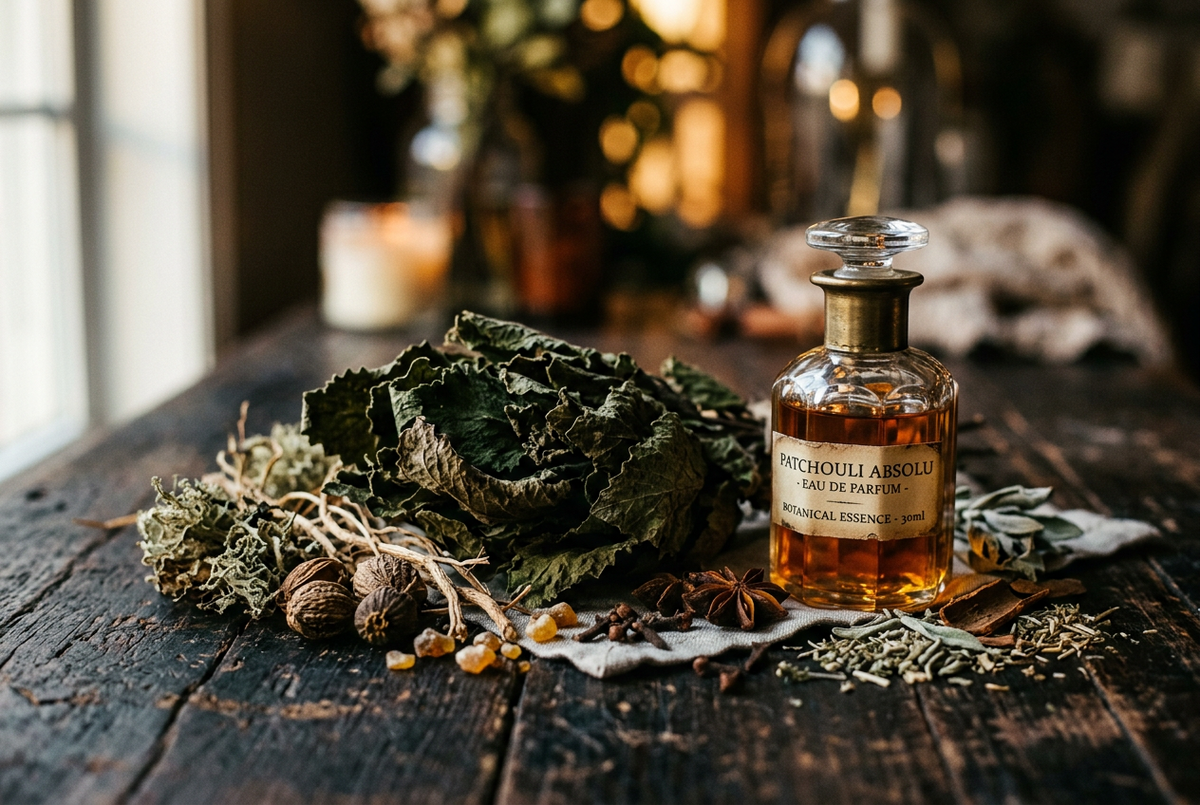
Fresh patchouli leaves barely smell. To get the oil, growers harvest the leaves, dry them, and leave them to ferment slightly. That breaks down the plant's cell walls and lets the aroma develop. The dried leaves are then steam-distilled, which pulls out a thick, amber-brown oil.
Here's the odd bit. Unlike most natural oils, patchouli gets better with age. Fresh oil can smell harsh and green. Left for a few years, it mellows, gets rounder and sweeter, a bit like a good wine. Perfumers prize aged patchouli for exactly this reason.
A short history (and how it got the hippie reputation)
Patchouli has been used in South and Southeast Asia for centuries, partly as a moth repellent. In the 1800s, fine shawls shipped from India to Europe were packed with dried patchouli leaves to keep insects off them. Europeans started linking the smell with luxury fabric, and French perfumers took notice.
Then came the 1960s and 70s. Patchouli oil was cheap, strong and easy to buy, so it became the scent of the counterculture. Worn neat, straight from a little brown bottle, it was heavy and earthy, and it stuck. That's the version a lot of people still have in their heads. It's not the version you'll find in most modern perfumes.
Why patchouli smells so different in modern perfume
This is the bit that clears up most of the confusion. The patchouli in a 2026 designer perfume is often not the same material that was in a 1970s headshop.
Raw oil vs "patchouli heart"
Perfumers can now fractionate patchouli oil. That means splitting it into parts and keeping only the bits they want. The most common version is called patchouli heart (or patchouli coeur). The darkest, mustiest, most "basement" parts are removed. What's left is cleaner, woodier and smoother, with less dirt and more polish.
If you've ever smelled a perfume listing patchouli and thought "that's not what I expected", this is usually why. Most big designer launches use cleaned-up patchouli. A lot of niche houses go the other way and use rich, dark, aged oil on purpose.
Lab-made patchouli-style woods
There are also modern molecules that smell patchouli-adjacent. One example is Clearwood, a material made by fermentation (the biotech kind, not the leaf kind) that gives a clean, woody patchouli feel without the earthy weight. You won't always see it on a notes list, because brands often just write "patchouli" or "woody notes".
Patchouli as a "fixer"
Patchouli is a base note. It's heavy, it evaporates slowly, and it holds lighter materials in place. So even in perfumes where you can't really smell it, patchouli is often doing quiet work underneath, making a fruity or floral scent last longer and feel more grown-up. (If top, heart and base notes are new to you, our fragrance pyramid guide explains how a perfume changes over the day.)
The perfume families where patchouli shows up
Once you know where to look, you'll see patchouli everywhere. These are the four places it does the most work.
Chypre: patchouli's classic home
A chypre (say "sheep-ruh") is a classic perfume structure built on bright citrus on top and a mossy, woody base. Oakmoss used to be the backbone of that base. Safety rules have since restricted oakmoss heavily, so modern chypres lean on patchouli to do the same job.
That's why Coco Mademoiselle works. Bright orange and bergamot up top, a clean, smooth patchouli underneath. It's a "modern chypre", and patchouli is the reason it smells polished rather than sweet.
Gourmand: the chocolate side
In 1992, Mugler Angel paired a huge dose of patchouli with caramel, praline and vanilla. It was wildly divisive and it changed perfumery. It's the reason the gourmand family looks the way it does today.
The trick is simple. Sugar alone smells flat and childish. Add patchouli's dark, cocoa-like earthiness and suddenly the sweetness has depth. Lots of modern sweet perfumes, including La Vie Est Belle and YSL Black Opium, list patchouli for this reason.
Woody and oriental-style scents
In warm, spicy, woody perfumes, patchouli adds weight and a slightly smoky darkness. It pairs well with amber, incense, vanilla and resins. Chanel Coromandel is a good example: patchouli wrapped in a soft, powdery, resinous blanket. It smells rich, not dirty.
Patchouli soliflores (patchouli front and centre)
Some perfumes are built almost entirely around patchouli. Reminiscence Patchouli is a cult classic: sweet, warm, ambery patchouli with that vintage feel. Tom Ford White Patchouli goes cleaner and more floral. These are the ones to try if you want to find out whether you actually like patchouli itself.
A funny exception: Le Labo Patchouli 24 smells mostly of smoky birch tar and vanilla. Barely any obvious patchouli. Note names don't always tell the full story.
What patchouli pairs well with
Patchouli is a team player, which is why it's in so many perfumes. Some pairings work especially well.
Rose and patchouli
One of the great perfume combinations. The rose brings brightness and softness, the patchouli gives it shadow and depth. Together they smell rich, a bit gothic, often more grown-up than either alone. Lots of modern "dark rose" perfumes are rose-patchouli at heart.
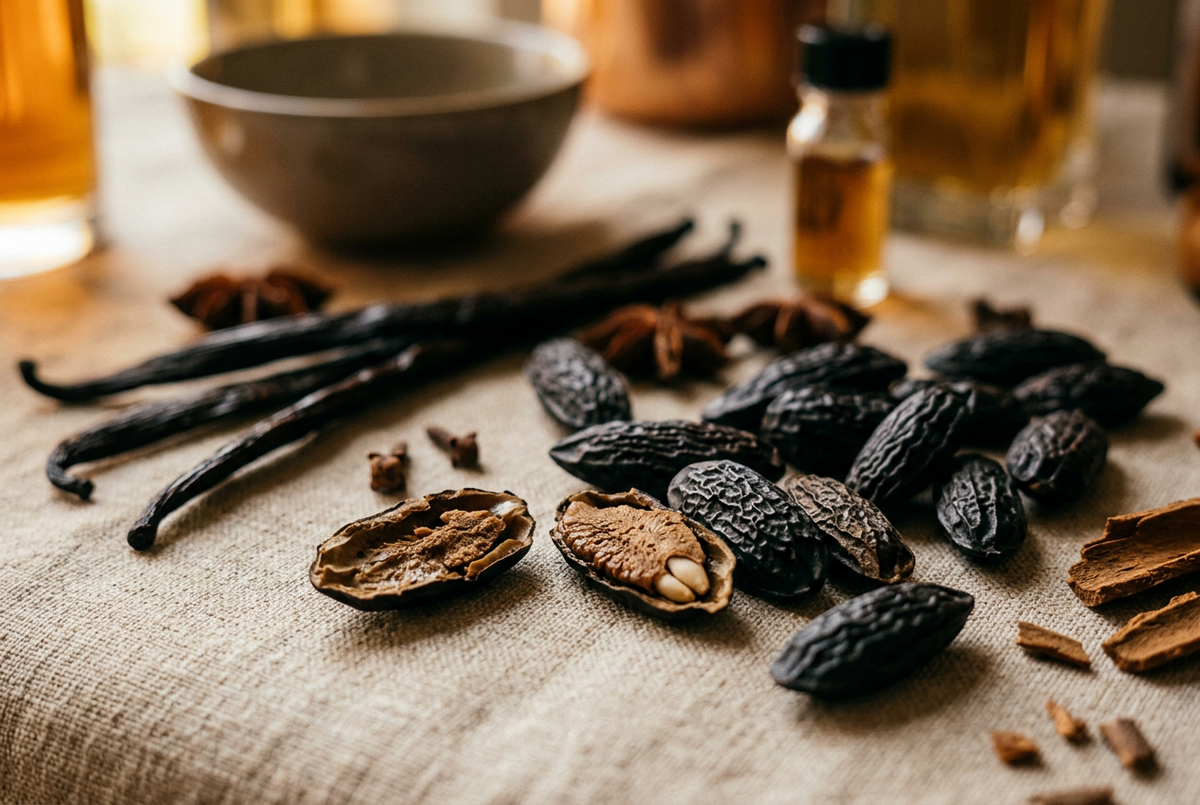
Vanilla, tonka and chocolate notes
The gourmand route. Patchouli stops vanilla from going too sugary and gives it a cocoa-dark edge. If you like dark chocolate more than milk chocolate, you'll probably like this pairing.
Citrus and bergamot
The chypre route. Bergamot and orange up top lighten patchouli and make it feel fresh and clean at the start, with the earthy base arriving later.
Woods, amber and incense
The cosy autumn route. Patchouli with cedar, sandalwood, amber or incense gives you a warm, slightly smoky scent that suits cold evenings. If you've read our vetiver guide, think of patchouli as its darker, sweeter cousin. It's also earthier than sandalwood.
Who patchouli suits (and when to wear it)
It's unisex. Fully.
Patchouli has no gender. Angel and Coco Mademoiselle are marketed to women. Plenty of patchouli-heavy woody scents are marketed to men. The note itself doesn't care. Wear whatever patchouli perfume you like.
Best seasons
Patchouli comes into its own in autumn and winter. Cold air holds heavy notes close to the skin and stops them feeling overpowering. In real heat, strong patchouli can turn stuffy, so in summer look for the cleaner chypre-style versions, or use a lighter hand.
Office-friendly or not?
Depends on the dose. A modern chypre with cleaned-up patchouli is fine for most offices. A dense patchouli-vanilla gourmand with big projection is better saved for evenings. As a rule, one or two sprays to the chest under a top beats four to the neck.
Patchouli and longevity
Because it's a heavy base note, patchouli lasts. Perfumes built around it often hang on for eight hours or more, and it clings to clothes and scarves for days. Good news if you want staying power. Less good if you blind-buy one and hate it.
How to test a patchouli perfume before you buy
This is where most people go wrong. They smell a patchouli perfume on a paper strip, get a hit of bright citrus, and buy it. Two hours later the base shows up and it's nothing like what they tested.
Give it time on skin
Patchouli lives in the drydown. That's the base of the perfume, which can take an hour or more to show. Spray it on your wrist, leave it, and smell it again after one hour and after four. That's the version you'll be living with.
Watch for the "dirt" moment
Some people find patchouli turns musty or "damp" on their skin a few hours in. That's not the perfume being faulty, it's your skin and nose meeting the earthier parts of the oil. If that happens, try a perfume that uses patchouli heart instead. They're usually far smoother.
Start small
Don't jump straight to a full 100ml bottle. Patchouli is a proper love-or-hate note. Try a sample or a decant first, wear it for a few days in real life, then decide. That's the whole reason we started the Vault: smelling things properly before you commit. (Our guide to testing perfume properly walks through the full method.)
Patchouli FAQ
What does patchouli smell like?
Patchouli smells earthy, damp and woody, like a forest floor or wet soil, with a sweet cocoa-like side and a slightly cool, camphor edge. In modern perfumes it's usually cleaner and smoother than the raw oil, reading as dark, polished wood.
Why does patchouli smell like dirt?
Raw patchouli oil contains earthy, musty-smelling compounds that remind people of soil, cellars and damp leaves. Many modern perfumes use 'patchouli heart', a cleaned-up version with the darkest, mustiest parts removed, so it smells far less like dirt.
Is patchouli a masculine or feminine scent?
Neither. Patchouli is fully unisex. It sits in perfumes sold to women, like Chanel Coco Mademoiselle and Mugler Angel, and in plenty of woody scents sold to men.
What perfumes have patchouli in them?
Well-known examples include Chanel Coco Mademoiselle, Mugler Angel, Lancôme La Vie Est Belle, YSL Black Opium, Chanel Coromandel, Reminiscence Patchouli and Tom Ford White Patchouli. It's also hidden in the base of many fruity, floral and gourmand perfumes.
Does patchouli last long on skin?
Yes. Patchouli is a heavy base note that evaporates slowly, so perfumes built around it often last eight hours or more, and the scent can cling to clothes for days.
Is patchouli good for autumn and winter?
Patchouli is at its best in autumn and winter, when cold air keeps heavy notes close to the skin. In hot weather, strong patchouli can feel stuffy, so lighter chypre-style versions work better in summer.
What's the difference between patchouli oil and patchouli heart?
Patchouli oil is the full steam-distilled oil from dried, slightly fermented leaves. Patchouli heart (or patchouli coeur) is a fractionated version with the darkest, mustiest parts removed, leaving a cleaner, woodier, smoother smell.
What does patchouli go well with in perfume?
Patchouli pairs especially well with rose, vanilla, tonka, chocolate notes, citrus and bergamot, amber, incense and woods like cedar and sandalwood.
Why does patchouli have a hippie reputation?
In the 1960s and 70s, patchouli oil was cheap, strong and easy to buy, so it became the signature scent of the counterculture. People wore it neat, which is heavy and earthy, and that's the version many people still picture.
Want monthly fragrance discovery without the £200 blind buys? The Vault Insider membership is built for exactly this: start for £9 (then £19/mo), members get every drop 48 hours early, and it's love-it-or-it's-free with a 30-day money-back guarantee, cancel anytime. Start for £9 →
Read this and still not sure which scent profile fits you? Take the 60-sec scent quiz → — we'll match you to one of 5 fragrance families.